
D2C Analytics Guide – Drive Growth with Insightful Data

Have you ever thought about why some D2C brands seem to grow effortlessly while others struggle, even when they have similar products and ad spend? The difference lies in how they use data.
The D2C market is booming, with direct-to-consumer sales projected to reach $595.19 billion by 2033. Yet most brands still make decisions based on gut feelings or surface-level metrics like revenue spikes. That’s where D2C analytics changes the game.
In this guide, we’ll show you how to set up D2C analytics the right way, read performance reports, and turn insights into growth that actually sticks.
What Makes D2C Analytics Different from Traditional E-commerce Analytics?
D2C analytics aren’t just “eCommerce analytics, but better.” They serve a different purpose altogether.
Your traditional eCommerce analytics answer transactional questions like:
How many units were sold? Which SKU moved fastest? Which channel drove revenue?
When it comes to D2C analytics, it answers business-building questions like:
Who is buying? What does it cost to acquire them? Will they come back? And is this growth actually profitable?
The differences show up in these key areas:
Data Ownership
D2C brands own their first-party data, including customer identities, browsing behavior, purchase history, and marketing interactions. Data is organized around the customer.
In traditional eCommerce models, customer data is often limited to or controlled by intermediaries. Brands typically see aggregated sales data with little visibility beyond the transaction.
Core Metrics
Traditional eCommerce analytics focuses on sales and operational metrics such as revenue, units sold, and inventory turnover.
D2C analytics center on customer and unit economics. They calculate metrics like CAC, LTV, contribution margin, repeat purchase rate, and payback period, which are foundational.
Customer Journey Visibility
With D2C analytics, you can track the full customer journey, right from the initial marketing touchpoints through conversion and repeat purchases.
In traditional eCommerce, the primary focus of analytics is on performance near the point of sale, which will have limited visibility into pre- and post-purchase behavior.
Demand and Inventory Signals
D2C analytics link customer behavior, marketing activity, and sales data, providing clearer demand signals for forecasting and inventory planning.
Traditional eCommerce analytics rely more heavily on historical sales and retailer reporting, which is often aggregated or delayed.

How to Set Up D2C Analytics For Your Brand
Setting up D2C analytics isn’t about installing more tools. It’s about creating a system that shows how money actually moves through your business.
Most founders already have data; what they don’t have is clarity.
If you build a solid D2C analytics setup, it does three things really well: it pulls data into one place, connects customer behavior to financial outcomes, and highlights what actually needs attention.
The setup looks something like this:
Start by Centralizing Your Data
If your data lives in silos, your decisions will too.
At the very minimum, your analytics should bring together:
- Your eCommerce platform (Shopify, Amazon, or both)
- Marketing channels (Meta, Google, email, SMS)
- Payments and refunds
- Inventory and fulfillment data
The goal isn’t achieving perfection, but creating a single source of truth where all your sales, marketing, and operations can be viewed in one place. Without this view, founders might end up reconciling their numbers by hand and second-guessing every report they generate.
Track Behavior, Not Just Outcomes
Revenue tells you what happened, but behavior tells you why.
With a proper D2C setup, you can track how customers move through your site. How many views your products are getting, the number of add-to-carts, checkout starts, drop-offs, and repeat visits all matter. This is where event-based tracking becomes important, because it shows friction points long before they show up as declining sales.
Founders often discover that performance issues blamed on ads are actually caused by site experience, pricing, or checkout flow.
Define The Metrics That Actually Matter
One of the biggest mistakes we see is tracking everything and learning nothing.
D2C analytics works best when a small set of metrics is clearly defined and reviewed consistently. If your business is at the growth stage, it includes acquisition cost, lifetime value, contribution margin, conversion rate, repeat purchase rate, and inventory turnover.
These metrics connect marketing activity to profitability and cash flow. Vanity metrics don’t.
Segment Before You Optimize
Not all your customers will behave the same way, and your analytics should reflect that.
Segmenting your first-time buyers, repeat customers, high-value cohorts, and churn-risk customers helps you interpret the data. Average performance often hides what’s really happening underneath.
Good D2C analytics let you see which customers drive profit and which ones quietly drain it.
Turn Reports Into Decisions
Dashboards are only useful if they can answer business questions.
An effective D2C analytics setup is designed to show all the changes, not just totals. You should be able to see what shifted this week. Where did margins compress? Which products slowed down? Which channels became more expensive?
When analytics highlight what changed and why it matters, founders can act quickly instead of reacting late.
At this point, many founders realize the problem isn’t data, it’s clarity.
You may already be tracking CAC, LTV, margins, and cash flow, but if those numbers aren’t connected, decisions still feel based on hunches. Knowing what changed is one thing. Knowing what to do next is another.
That’s where CFO-level insight helps.
At CFO Expertise, we help D2C founders turn analytics into clear financial direction, connecting performance data to profitability, cash flow, and growth decisions.
If you want your analytics to actually guide your next move, book a consultation.
Tips to Analyze Your D2C Performance Report
A D2C performance report should help you understand what’s working, what’s breaking, and where to focus next. When reviewing it, look beyond surface-level numbers and focus on how the metrics connect.
Here’s what you can do:
- Look at trends, not isolated periods: If you’re only keeping track of a single week or one month of data, it can be misleading. Compare performance over time to understand exactly if changes are structural or just short-term noise.
- Always evaluate CAC alongside LTV: Customer acquisition cost means very little on its own. When you pair it with lifetime value, you can see whether you’re building profitable growth or just buying revenue.
- Separate new and returning customers: If you are tracking blended financial metrics, it will hide important patterns. New customer performance shows how effective your acquisition is, while returning customer data reveals the strength of your retention.
- Analyze the funnel, not just final sales: Review how traffic flows from product views to checkout to purchase. If you can break them down earlier in the funnel, it often explains the rising ad spend or stalled revenue.
- Focus on contribution margin, not just gross margin: Gross margin just ignores all the marketing and fulfillment costs. But contribution margin shows what’s left after variable costs, which funds growth.
- Compare efficiency across channels: Revenue by channel doesn’t equal performance. Look at CAC, payback period, and margin by channel to see which ones truly scale.
- Use segmentation to avoid false conclusions: Analyze results by product, cohort, or channel before making decisions. Averages often mask what’s really driving performance.
- End every review with a clear action: A performance report should lead to a decision, whether that’s adjusting spend, fixing funnel issues, or rethinking inventory buys.

How to Report D2C Analytics Insights To Stakeholders
Reporting D2C analytics isn’t about showing everything you know. It’s about helping the right people understand what’s happening in the business and what needs to happen next.
Here’s how you should do it:
Anchor Every Report to a Business Goal
Before you show a single chart, be clear about what the business is trying to achieve. Whether it’s reducing CAC, improving cash flow, or increasing repeat purchases, the report should clearly answer one question: are we closer or further from that goal?
This framing prevents the discussion from drifting into vanity metrics.
Lead With Insights, Not Metrics
Stakeholders don’t need a walkthrough of how the numbers are calculated. They want to know what the data is telling them.
Open with the conclusion first, then support it with data. For example, say what changed in performance and why it matters, then show the metric that proves it.
Adjust Depth Based on Who’s Reading
Not everyone needs the same level of detail.
Executives want outcomes and implications. Marketing teams need campaign-level context. Operations teams care about execution issues. Use the same data, but adjust the level of detail you disclose and the focus of your attention.
Use Visuals to Clarify, Not Impress
Charts should make decisions easier, not just make those slides look good.
Use the chart to show trends over time, comparisons across channels, or even breakdowns by cohort. If any of those charts need verbal explanation to make sense, it’s probably not doing much.
Add Context Behind the Numbers
A number without context invites speculation.
If performance spiked or dropped, explain what caused it. Campaign launches, stockouts, pricing changes, or tracking updates should always be called out so stakeholders don’t misinterpret the data.
Translate Insights Into Business Impact
Good reporting will always connect performance to money.
So, instead of saying the conversion has dropped, they explain how it has affected revenue and margins, or how it poses a risk to inventory. This will keep the discussions grounded and aligned with business reality.
End With Decisions and Owners
A report should close the loop.
Clearly state what action is being taken, who owns it, and what success looks like. This turns analytics from a review exercise into an operating tool.
Top 6 D2C Analytics Tools – Complete Comparison
There is no single analytics tool that fully covers every D2C use case. Most brands rely on a combination of tools to understand customer behavior, marketing performance, and business economics.
What matters is understanding each tool’s role in a D2C analytics stack and where its insights end.
Here are the top D2C analytics tools:
1. Google Analytics 4 (GA4)
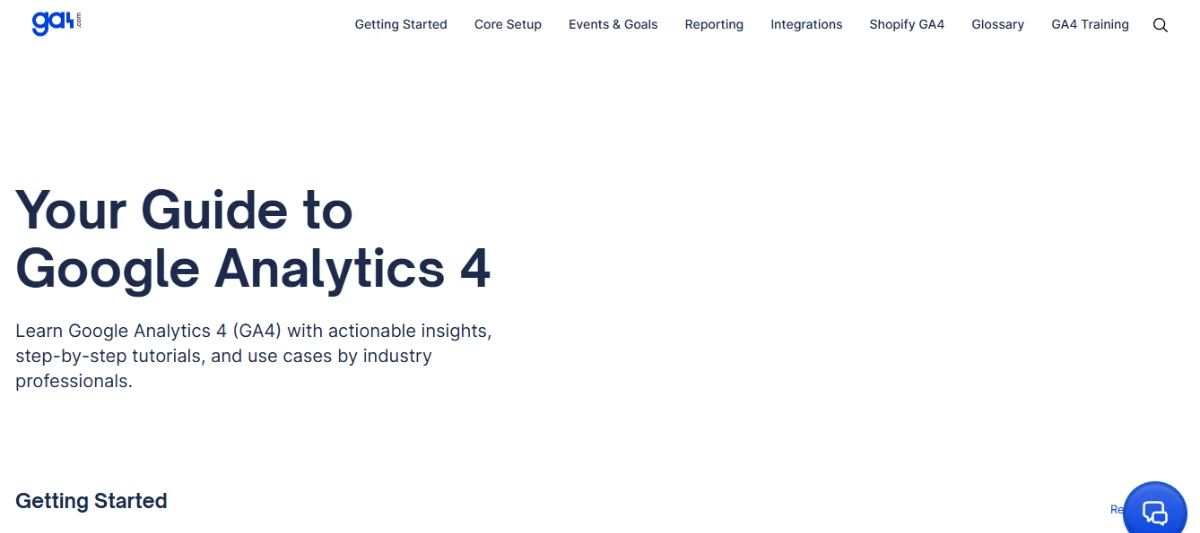
GA4 is the foundation for tracking how users interact with your D2C storefront. It captures traffic sources, user behavior, and conversion paths across devices.
It helps answer questions around where customers drop off, which pages influence conversions, and how different channels drive site activity. However, GA4 focuses on events and sessions, not on customer-level economics. Metrics like lifetime value, retention cohorts, or contribution margin need to be modeled outside the platform.
GA4 is most effective when treated as a behavioral layer rather than a source of business performance truth.
2. Triple Whale
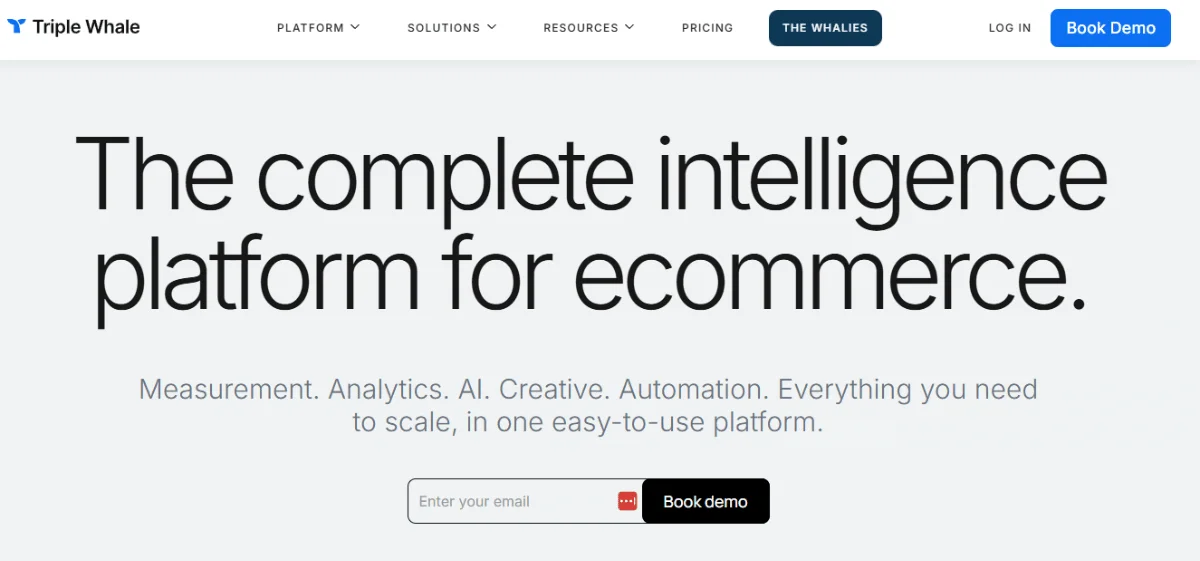
Triple Whale is built specifically for D2C brands, and it mostly focuses on profitability and attribution.
It combines data from all ad platforms, Shopify numbers, and post-purchase insights to show how acquisition, retention, and margins interact. Instead of optimizing toward surface-level ROAS, it pushes teams to evaluate growth through contribution margin and payback period.
This makes it particularly useful for brands that want to move beyond channel-level performance and understand true growth efficiency.
3. Glew
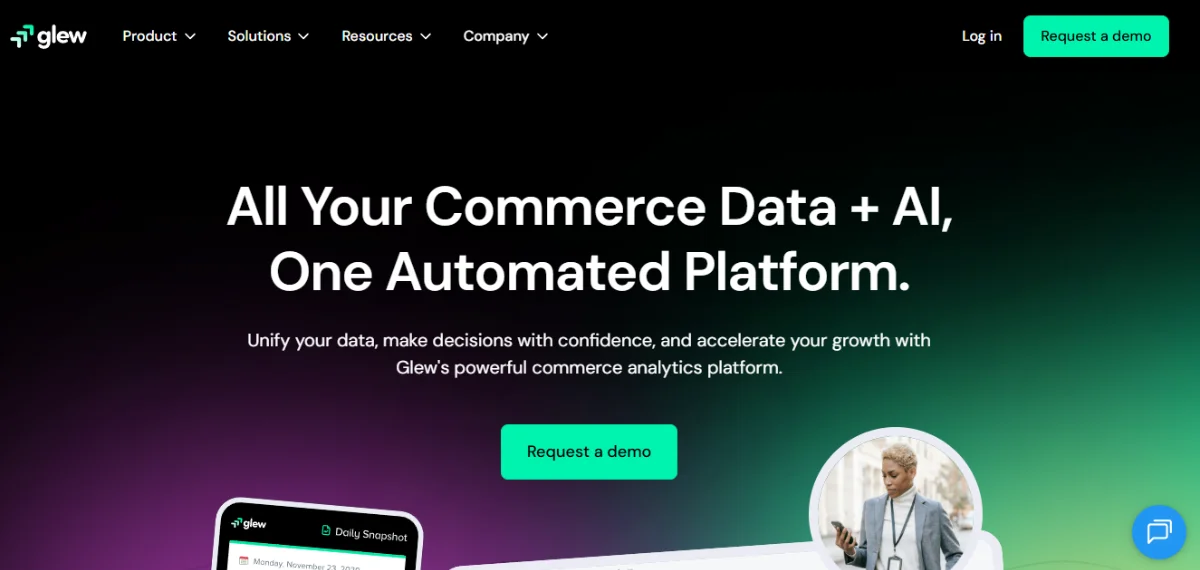
Glew positions itself as an eCommerce intelligence platform that unifies data across marketing, sales, inventory, and operations.
It helps teams bring together multiple data sources into a single reporting layer, making cross-functional reporting easier. While it provides customer and product analytics, deeper D2C modeling around lifetime value, cohort behavior, and profitability often requires additional configuration and interpretation.
Glew works best as a central visibility layer rather than a decision engine on its own.
4. Mixpanel
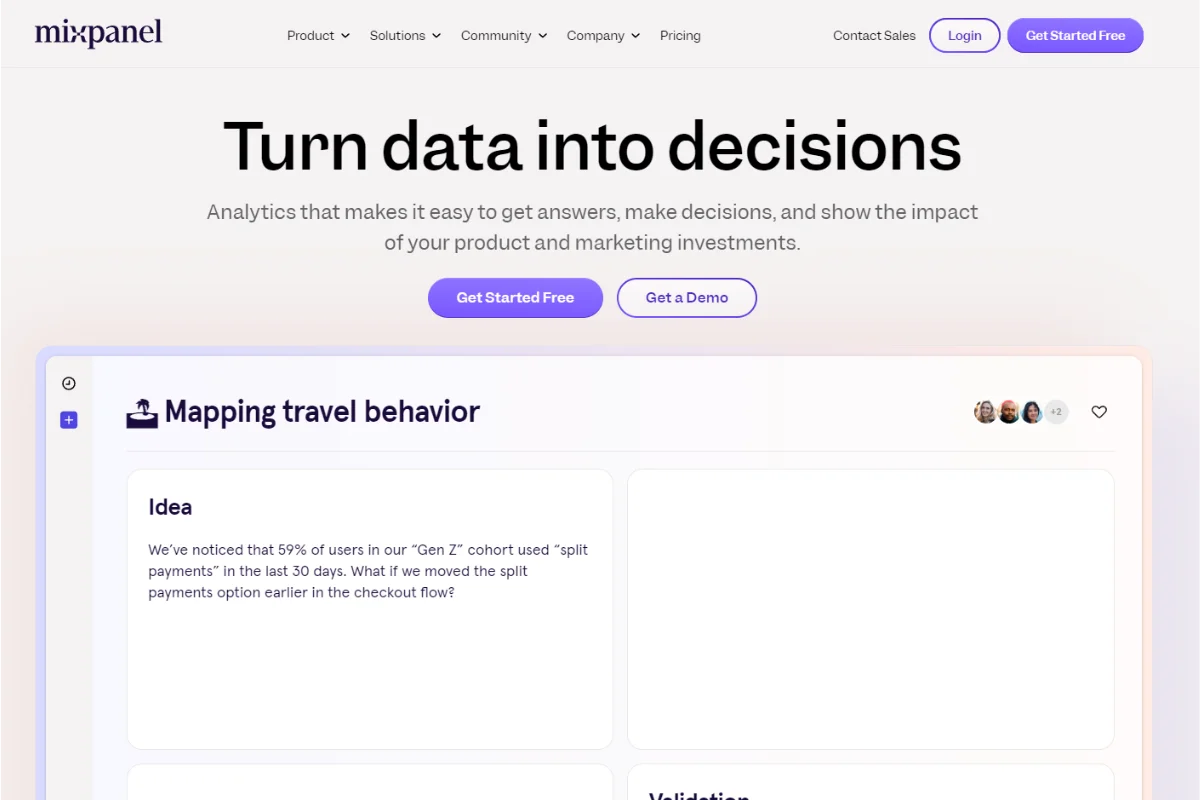
Mixpanel focuses on product and behavior analytics rather than traditional eCommerce reporting.
For D2C brands, it’s often used to analyze customer journeys, checkout behavior, and feature-level engagement. It excels at answering how users move through experiences and where friction exists.
However, revenue, margin, and retention insights are not its core focus and typically need to be integrated from other systems.
5. Woopra
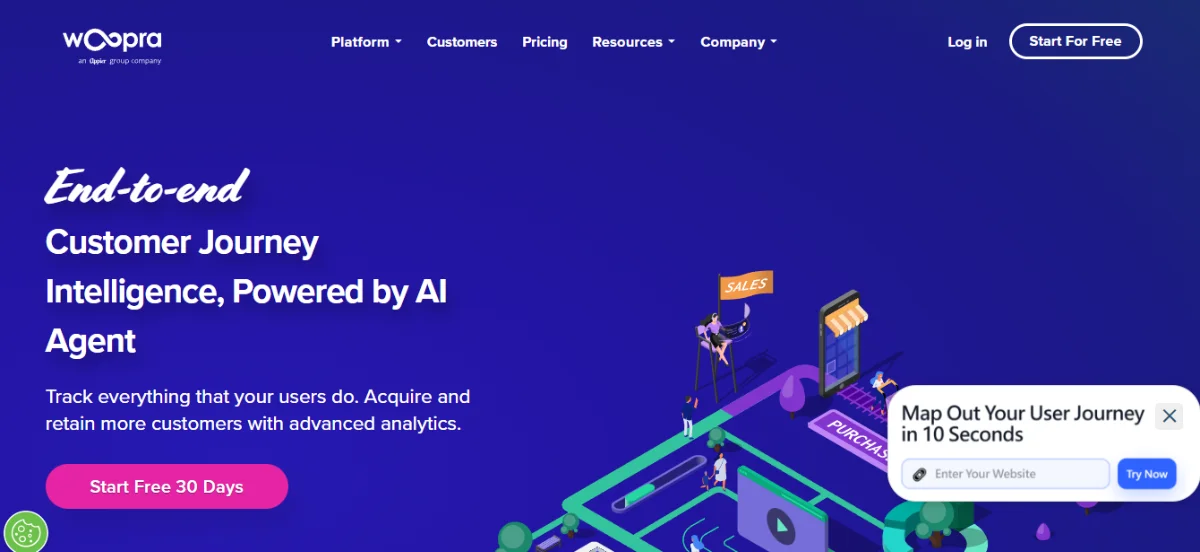
Woopra tracks customer journeys across marketing, product, and support touchpoints at an individual level.
It helps D2C teams understand how different interactions influence conversion and repeat purchases over time. This people-first approach makes it useful for mapping long-term customer behavior.
Like other journey tools, it provides limited native insight into D2C unit economics unless paired with additional data sources.
6. Matomo
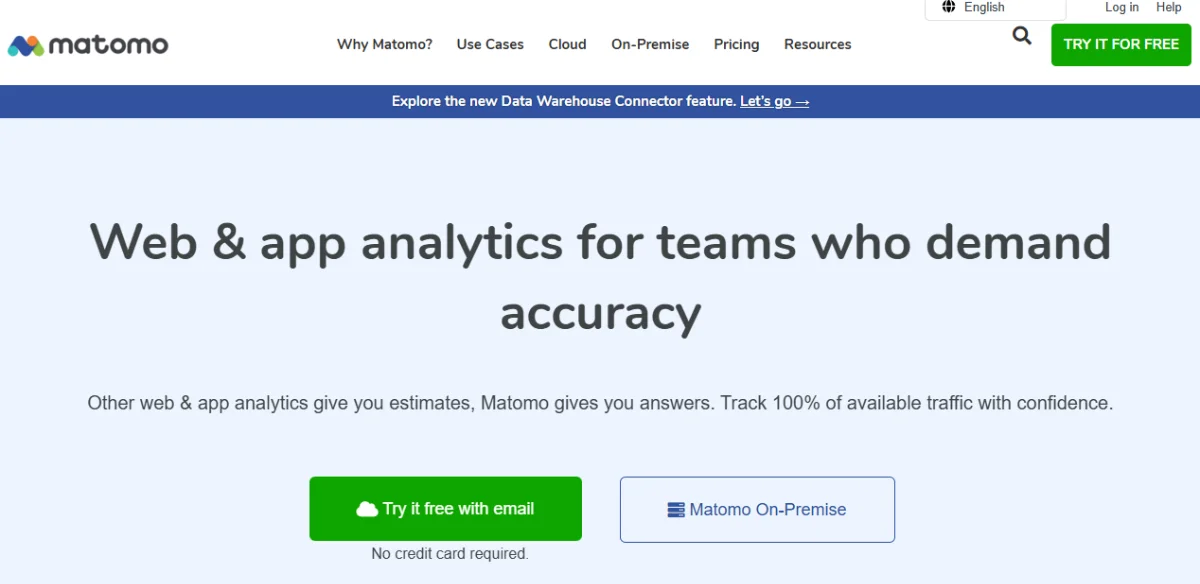
Matomo is a privacy-focused analytics platform that emphasizes full data ownership and compliance.
It tracks website and eCommerce activity in a way similar to GA4 but gives brands greater control over where data is stored and how it’s used. While it supports eCommerce reporting, D2C-specific insights such as LTV, cohort retention, and SKU-level profitability require custom analysis.
Matomo is often chosen for governance reasons rather than depth of D2C insight.
How to Choose the Right D2C Analytics Tool for Your Brand
Picking a D2C analytics tool isn’t about finding the one with the most features. It’s about matching your business questions to the tool’s strengths.
Here’s how to think about that choice so it’s strategic:
Start With The Business Questions
Before evaluating platforms, clarify what you need answers to. Some brands need clarity on acquisition efficiency and payback periods. Others are focused on retention, cohort behavior, or product-level profitability. The right tool depends on whether you’re trying to understand growth, diagnose inefficiencies, or plan the next phase of scale.
Without this clarity, it’s easy to invest in analytics that look impressive but don’t inform decisions.
Make Sure it Fits Your Existing Tech Stack
D2C analytics only work when data flows cleanly between systems. Your analytics tool should integrate seamlessly with your eCommerce platform, ad channels, and CRM, without requiring constant manual work.
If the setup feels fragile or requires heavy engineering support, insights will always be questioned. Clean integration is what makes the data trustworthy in the first place.
Prioritize Customer Economics Over Surface Metrics
Page views and clicks are easy to track, but from those, you won’t be able to tell whether growth is sustainable. A strong D2C analytics tool will help you understand how much it costs to acquire customers, how long they stay, how often they return, and when they become profitable for your business.
When analytics connect marketing activity to customer lifetime value and payback periods, you can easily make informed, grounded decisions.
Evaluate How it Handles Attribution and Funnels
D2C journeys rarely stay linear. Before converting, customers interact on multiple channels, and the last-click attribution often masks what’s actually driving demand.
While there is no perfect attribution model, the right tool should be able to give you visibility into the full funnel and show how each one of your touchpoints contributes to conversions. The goal is directional clarity, not false precision.
Consider Who Will Actually Use the Tool
Analytics shouldn’t live only with analysts or engineers. Marketing, growth, and leadership teams should be able to explore performance, understand trends, and ask better questions without waiting for custom reports.
Tools that are intuitive tend to get adopted, and adoption is what turns data into shared understanding across teams.
Match The Tool to Your Stage of Growth
Early-stage brands usually need more financial clarity and control, rather than complexity. As you start to scale, you need deeper cohort analysis, forecasting, and profitability modeling become increasingly important.
Choosing a tool that fits your current needs while supporting future growth helps you avoid expensive migrations later.
Here’s a financial playbook for you to scale strategically.
Look for Tools That Drive Decisions, Not Just Dashboards
The best D2C analytics tools will show you what happened and also help your teams understand what changed, why it matters, and what to do next.
When analytics consistently drive clearer actions, they stop being a reporting function and become a growth lever.

Frequently Asked Questions (FAQs)
Here are answers to common questions about tracking, analyzing, and acting on your D2C data:
How Does D2C Analytics Support Brand Positioning Strategy?
D2C analytics show how customers actually behave, not just what they say. By tracking repeat purchases, pricing sensitivity, and product mix, brands can see what customers value most and adjust positioning accordingly. This turns brand decisions from opinion-based to data-backed.
What Data Privacy Rules Affect D2C Analytics?
There are strict privacy regulations, such as GDPR and CCPA, that govern how your customer data needs to be collected and used. This will affect your tracking, attribution, and marketing activation.
It goes without saying that a solid D2C analytics setup prioritizes consent, transparency, and compliant first-party data collection to protect both accuracy and trust.
How Do I Benchmark My D2C Performance Against Competitors?
You won’t have full visibility into competitors’ numbers, but industry benchmarks for CAC, conversion rates, retention, and margins provide useful context. The goal is to understand whether your metrics support profitable growth, not to chase averages.
What First-Party Data Tactics Improve D2C Accuracy?
An accurate D2C analytics mainly relies on strong first-party data. That means clean checkout data, simple post-purchase surveys, and paying attention to how customers engage with your email, SMS, and on-site content. These are all the first-party data that you need to be tracking for a clearer view of customer value and intent.
Conclusion
D2C analytics focuses on understanding customers, profitability, and the levers that actually drive growth.
We’ve laid out the process for setting up a system that centralizes data, tracks behavior, defines meaningful metrics, segments customers, and turns insights into decisions.
Now it’s your time to act: audit all your current analytics, focus on those metrics that impact cash flow, connect marketing and operations to profitability, and use reports to guide real business decisions, not just vanity numbers.
If this feels overwhelming, CFO Expertise can help. We turn raw data into clear, actionable insights, providing strategic financial guidance for D2C and eCommerce founders.
From KPI dashboards to cash flow planning and growth strategy, we make sure your decisions are backed by numbers you can trust.
Start using your analytics to drive growth; partner with CFO Expertise today.
