
E-commerce Financial Forecasting Framework That Works

Online shopping is growing rapidly. Global online retail sales jumped from $1.3 trillion in 2014 to $4.4 trillion in 2023 and are projected to hit $6.8 trillion by 2028. This growth rate brings massive opportunity, but also complexity for every e-commerce business.
More channels. Faster demand swings. Longer cash cycles. Higher pressure on inventory and margins.
This is exactly why financial forecasting matters more in e-commerce than in almost any other business model. Without a clear forecast, growth can quietly strain cash, hide unprofitable channels, or turn inventory decisions into expensive mistakes.
This guide breaks down an e-commerce financial forecasting framework that actually works. Not theory. Not generic templates. A practical way to understand where your business is headed, what it will take to get there, and whether cash can support the plan.
TL;DR – E-commerce Financial Forecasting Framework
For a quick overview before we go deeper, this is what an effective e-commerce financial forecasting framework looks like:
- Start with clean inputs and clear assumptions.
- Anchor your forecast in the three core financial statements.
- Model cash flow and inventory together,
- Choose the right level of detail for your stage.
- Review, test, and update regularly.
We’ll break each of these steps down in detail throughout the rest of the blog so you can see how they work in practice.

How Does E-commerce Financial Forecasting Differ From Traditional Retail?
To make the differences clearer, it helps to see them side by side. E-commerce and traditional retail operate under very different financial realities, and forecasting needs to reflect that.
Here’s how they compare at a practical level:
Essential Components of an E-commerce Financial Forecast
A solid e-commerce forecast isn’t just a revenue guess with a spreadsheet wrapped around it. It’s a working model of how your business actually runs. When done right, it tells you what’s going to happen to your cash before it happens.
Let’s break down the key components that matter:
- Revenue Projections: A forecast should be able to present revenue by channel and customer type, not just as a single top-line number. The historical performance, seasonality, and planned promotions will all inform realistic projections. Most teams benefit from viewing multiple scenarios to understand risk and upside.
- Cost of Goods Sold (COGS): Accurate forecasting requires a fully loaded view of COGS. This includes product costs, freight, duties, fulfillment fees, and platform-related costs. Small inaccuracies here can significantly distort margin and cash expectations.
- Operating and Marketing Expenses: Expenses should be categorized into two sections: fixed and variable costs. In particular, marketing spend needs to be forecasted alongside all performance assumptions, such as CAC and conversion rates, to avoid overestimating profitability as spend scales.
- Profitability metrics: Gross margin provides a baseline, but contribution margin offers a much clearer insight into which channels and products are truly supporting growth. Including both of them in the forecast helps you understand where profits are generated and where they are being lost.
- Cash Flow Timing: Sales do not equal cash. Forecasts must account for payment processor payout cycles, marketplace delays, inventory prepayments, refunds, and chargebacks. This is essential for managing working capital and avoiding liquidity surprises.
- Pro Forma Financial Statements: A complete forecast produces forward-looking versions based on your current income statement, cash flow statement, and balance sheet. These are the basis that translate assumptions into a structured financial view that supports decision-making and external conversations.

How to Build Your E-commerce Financial Framework
Think of a financial framework as your business’s roadmap in numbers. It helps answer certain essential questions: Where are we going? What resources will it take? And can cash keep up with the plan?
Let’s see how it comes together:
1. Start with Clean Inputs and Explicit Assumptions
Every forecast is based on some assumptions. That’s why you should start by gathering all reliable historical data wherever possible. It can be revenue by channel, average order value, conversion rates, and seasonality patterns.
Then document your cost structure clearly. Separate variable costs such as manufacturing, shipping, fulfillment, and payment processing from fixed costs like software, salaries, and professional services.
Most importantly, make your assumptions clear and visible. Showcase the growth rates, CAC, inventory turnover, and lead times. When assumptions are clear, forecasts become essential tools from which you can learn, not some black boxes with no clue.
2. Build Around the Three Core Financial Statements
A strong framework is anchored in forward-looking versions of your financial statements.
Your projected profit and loss shows whether the business model works on paper.
Your cash flow forecast shows whether it actually works.
Your projected balance sheet shows how growth impacts assets, liabilities, and working capital.
These statements should tie together. If they don’t, the framework isn’t telling the full story.
3. Model Cash Flow and Inventory Together
In the e-commerce sector, inventory decisions are driven by cash outcomes. Forecasting your inventory without cash flow, or vice versa, creates significant blind spots.
Your framework should reflect lead times, minimum order quantities, prepayments, and expected sell-through. This allows you to see cash needs before they become urgent, not after.
Maintaining an adequate cash reserve is part of this planning process, not an afterthought of the choices you make.
4. Choose the Right Level of Detail for Your Stage
The early-stage brands need shorter-term, more frequent forecasts focused on cash and survival. Growth-stage brands need models that support hiring, marketing scale, and inventory expansion. When it comes to exit-focused brands, they need forecasts that align with valuation and buyer expectations.
The right framework evolves with the business. More detail isn’t always better. Useful detail is.
5. Review, Test, and Update Regularly
A financial framework isn’t a one-time work. It has to be reviewed against your actual performance and updated most regularly.
That’s why you need to track a small set of core metrics and run simple scenario analysis to highlight risks early and keep forecasts grounded in reality. Over time, this turns forecasting into a decision-support tool rather than a static report.
Common Forecasting Pitfalls and How to Avoid Them
Even the most carefully built financial forecast can run into trouble if common pitfalls aren’t addressed.
Here are the most frequent mistakes e-commerce brands make, with practical ways to avoid them:
- Using Disconnected or Low-Quality Data: Forecasts built from siloed, inconsistent, or outdated data are prone to errors. Centralize your financial and operational data, or use an integrated planning platform, so your forecasts reflect accurate, real-time information.
- Assuming the Past Will Repeat Itself: Historical trends are useful but not predictive. Combine past performance with market insights, competitor activity, and input from sales and operations to create realistic, forward-looking forecasts.
- Treating Forecasting as a One-Time Exercise: Forecasts updated only quarterly or monthly quickly become outdated. Implement rolling forecasts to continuously reflect current results, market shifts, and evolving business conditions.
- Ignoring Scenario Planning: Basing your plan only on a single “best-case” projection leaves your business unprepared. Include multiple scenarios, be it your best, worst, and base cases, so you can anticipate risks and respond to opportunities.
- Over-Relying on Spreadsheets: Spreadsheets are familiar, but can’t scale with complex operations. Cloud-based forecasting tools automate calculations, integrate data, and reduce errors, freeing your team to focus on insights rather than data cleanup.
- Overlooking Context Behind the Numbers: Numbers alone will not be able to explain why results change. Pair your metrics with narrative insights to understand drivers of growth, spikes, or dips, turning your forecast into a true decision-making tool.
- Working in Silos: Finance-only forecasts often miss some of the critical inputs that you get from sales, marketing, or operations. Involve your cross-functional teams to refine assumptions, improve accuracy, and ensure a shared understanding across the organization.
- Focusing Only on Short-Term Projections: Monthly or quarterly forecasts are useful but limited. Extend your planning horizon with rolling or multi-year forecasts to reveal emerging risks and guide strategic decisions on inventory, marketing, and hiring.

Critical E-commerce Metrics to Track and Forecast
There are certain essential metrics that you need when you’re forecasting your e-commerce business.
Tracking the right metrics keeps your financial framework focused and actionable:
- Revenue: Total sales across all channels, giving you the starting point for growth projections and helping you understand the entire momentum of the business.
- Average Order Value (AOV): This metric gives you revenue per transaction, helping you forecast sales based on traffic volume and informing pricing and upsell strategies.
- Customer Acquisition Cost (CAC): Through this, you’ll know how much you have spent to bring in one new customer, which is very critical when planning your marketing and ROI analysis.
- Customer Lifetime Value (CLV/LTV): The expected revenue from one single customer over time, which is the key for budgeting and channel strategy, and helps identify your most valuable customer segments.
- Gross Margin: Revenue minus COGS, showing how much profit each sale generates before operating expenses, which guides pricing and product decisions.
- Contribution Margin: When you subtract revenue from variable costs, it highlights which products or channels truly drive profitability and where to focus growth efforts.
- Cash Flow Timing: Understanding when cash enters and leaves your business to avoid surprises and ensure you can fund operations and growth initiatives.
- Inventory Turnover: This measures how quickly your stock turns over, which basically impacts both your revenue potential and working capital, and helps you prevent overstock or stockouts.
- Conversion Rate: Percentage of site visitors who buy, influencing revenue forecasting and marketing ROI, and showing where user experience improvements can drive growth.
Best Tools and Services for E-commerce Financial Forecasting
When it comes to e-commerce forecasting, with the right tools by your side, you can make a big difference.
Here are some of the standout options that help you turn all your raw data into actionable insights:
1. CFO Expertise

CFO Expertise isn’t just a platform; it’s fractional CFO support built specifically for e-commerce and D2C brands. Beyond providing you with accurate forecasts, we transform financial data into clear, actionable insights. Our services include:
- E-commerce-first focus: Shopify, Amazon, and D2C expertise
- Custom KPI dashboards: Track revenue, CAC, LTV, margins, and more
- Accrual accounting excellence: Investor-ready books delivered by the 10th of each month
- Forecasting & growth planning: Cash flow, inventory, and marketing spend guidance
- Exit & acquisition support: Financial cleanup and valuation modeling
We help you maintain clarity, avoid common forecasting pitfalls, and make smarter decisions backed by experience and data-driven insight.
Bring CFO-level clarity to your e-commerce brand. Book a consultation with CFO Expertise today.
2. Anaplan
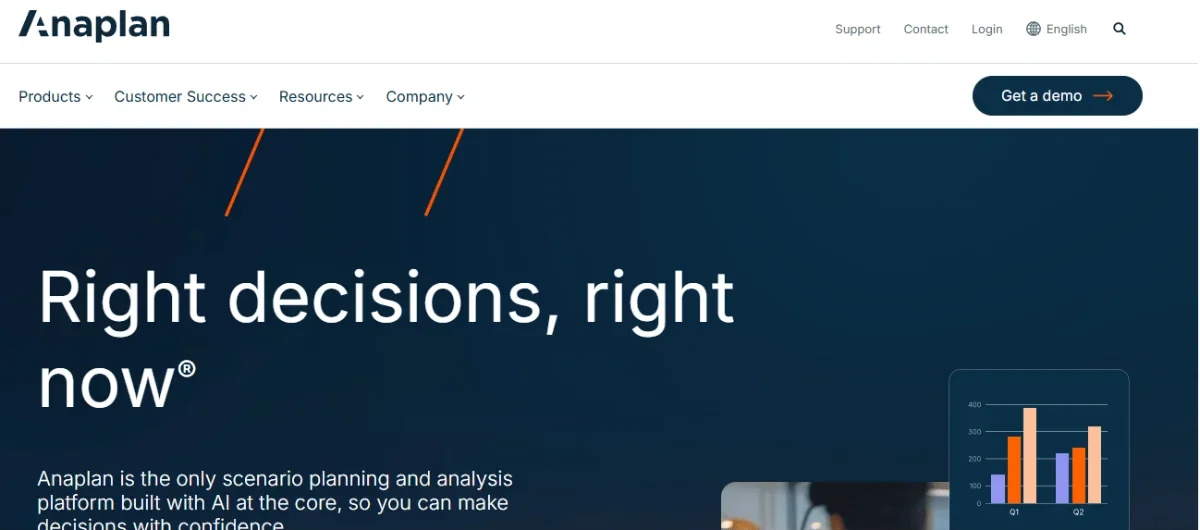
Anaplan is an enterprise-grade forecasting solution that connects people, data, and plans at scale. Its real-time scenario modeling, comprehensive budgeting, and cross-department collaboration make it ideal for large or fast-growing brands.
Sometimes it can require significant time and effort to customize, which might feel heavy for smaller teams.
3. Vena
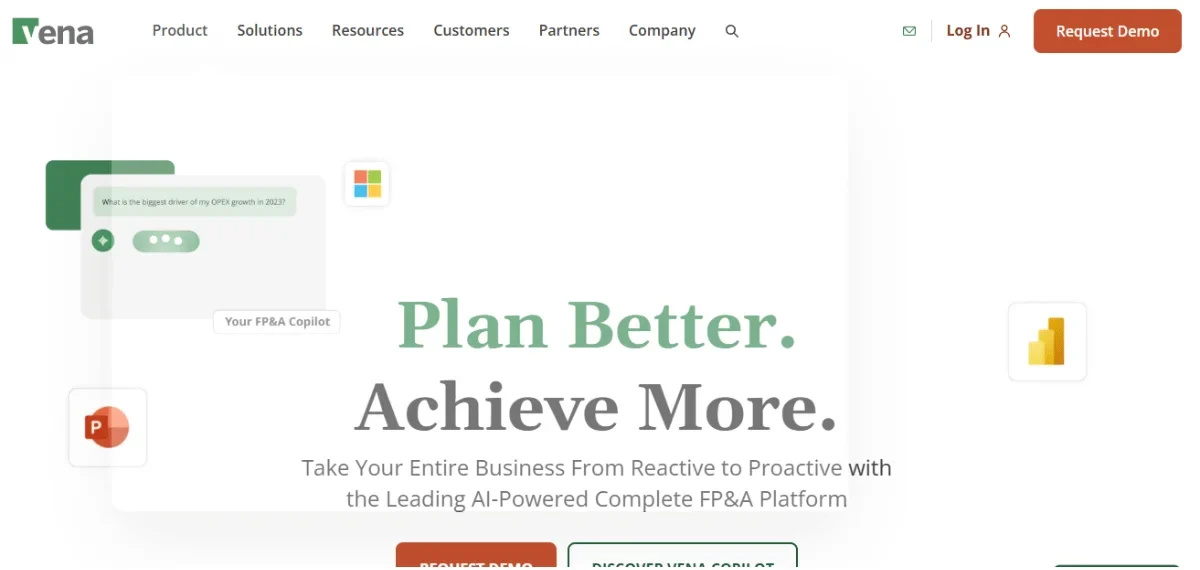
Vena combines the familiarity of Excel with cloud-based FP&A capabilities. It consolidates financial data into a single source of truth, enabling forecasting, cash flow planning, and “what-if” analyses without the limitations of spreadsheets.
For smaller brands, this software may be a little more expensive than other spreadsheet-based alternatives.
4. Cube
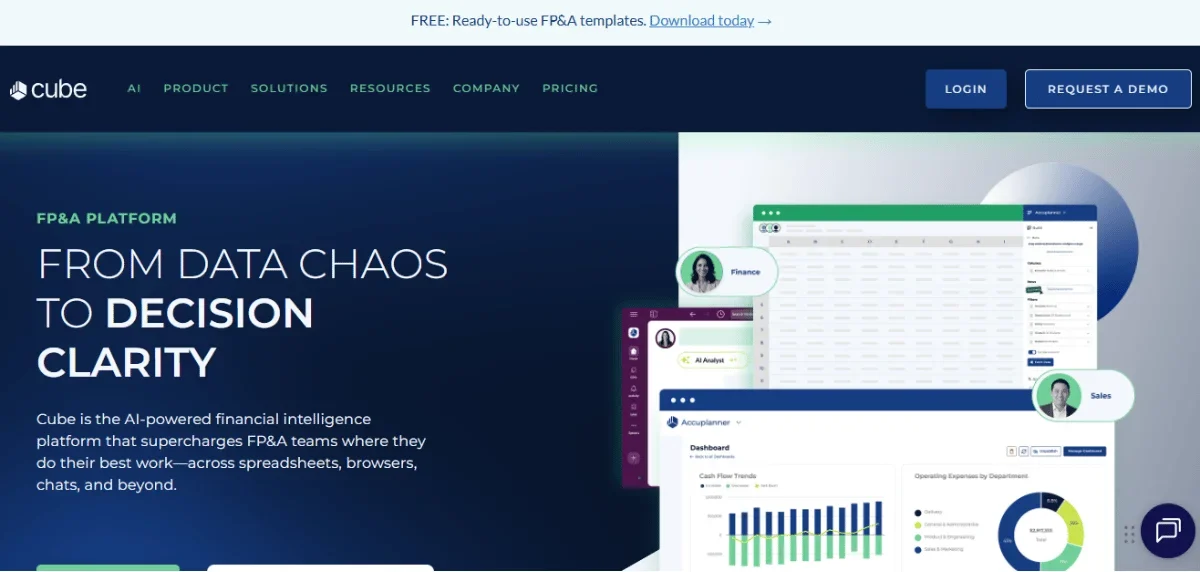
Cube is an easy, intuitive platform for corporate budgeting and forecasting. It integrates well with ERPs, CRMs, and e-commerce accounting software, allowing teams to model scenarios, consolidate data, and track KPIs with minimal training.
While it’s easy to adopt, Cube lacks some of the advanced analytics needed for very large or complex businesses.
5. Planful

Planful automates cash flow, rolling forecasts, and scenario planning. Its AI-enhanced platform reduces manual work, enabling finance teams to focus on strategic decisions rather than data wrangling.
Some users highlight that there is a learning curve for setting up advanced scenarios, and smaller teams may not need all its enterprise-level features.
Frequently Asked Questions (FAQs)
Here are answers to some of the most common questions about forecasting and planning:
How Real-Time Data Impacts E-commerce Forecasting?
Real-time data lets you react quickly to changes in customer behavior, inventory levels, or marketing performance.
Instead of relying solely on historical trends, you can adjust forecasts on the fly, minimize stockouts, and optimize cash flow.
What Role Does Customer Lifetime Value Play in Forecast Accuracy?
CLV shows you the long-term value each customer will bring to your business. An accurate CLV calculation helps you budget your marketing spend, predict most of your repeat purchases, and assess which acquisition channels are profitable.
Forecasts that ignore CLV risk overestimate short-term revenue and underestimate customer retention costs.
What External Economic Indicators E-commerce Brands Should Track?
You need to track macro trends such as consumer spending, interest rates, inflation, and the performance of the e-commerce sector.
For international sellers, consider currency fluctuations and regional regulations. These factors can impact sales, pricing strategies, and inventory planning.
How Forecasting Differs for Subscription E-commerce Businesses?
Subscription models rely mostly on recurring revenue and churn rates. However, forecasting has to account for new sign-ups, cancellations, plan upgrades/downgrades, and seasonality.
Accurate cash flow predictions depend on understanding these recurring patterns rather than one-time transactions.
Conclusion
Your e-commerce growth may not fail because there’s a lack of demand for your products, but it may be because your decisions, cash, and inventory don’t sync with each other.
Brands that scale better have a clear understanding of their numbers deeply, forecast with intent, and make decisions before problems show up in cash or inventory.
A forecasting framework that works gives you that edge. It turns complexity into clarity. It shows you not just where revenue is going, but whether margins, cash, and operations can support the ride.
That’s where CFO Expertise comes in.
We work side-by-side with e-commerce and D2C founders to help bring CFO-level thinking into your everyday decision-making. Clean, accrual-based books. Forecasts that actually connect to inventory, marketing, and cash. Dashboards that tell you what matters, not everything. And guidance that helps you grow without losing control.
If you want forecasting that supports real growth, not just reporting, book a free financial clarity call.
