
E-commerce Analytics from Data to Decisions – Complete Guide

When implemented effectively, data-driven strategies empower e-commerce businesses to adjust to market changes, enhance customer experience, and make informed decisions.
But that is only possible when you actively harness the value of your data. While e-commerce businesses collect vast amounts of data, many struggle to turn it into actionable insights and measurable results.
The outcome? Businesses operate blindly, making critical decisions based on guesswork and assumptions instead of actionable data.
E-commerce analytics changes that, enabling you to move from data to decisions to scale smarter and drive stronger outcomes. And in this guide, we show you how to make the most of your data.
Critical E-commerce Metrics and KPIs That Drive Decisions
Maximizing the value of your data begins with tracking the key performance indicators (KPIs) that matter the most to your business.
These metrics provide clarity across your sales, marketing, and operations, helping you identify what’s working and what’s not.
They include:
- Sales conversion rate: The percentage of visitors who purchase from your store, and its formula is number of sales/total leads x 100.
- Average order value (AOV): The average amount spent by customers when placing an order.
- Customer lifetime value (CLV): The total revenue from a single customer throughout their relationship with you.
- Customer retention rate (CRR): Measures the percentage of customers a business keeps over a specific period of time.
- Website traffic volume: The number of users visiting your site. You can break down the volume by source, such as social media, email, and search engines.
- Cart abandonment rate: The percentage of customers who add items to their carts but leave without purchasing.
These metrics provide critical insights for measuring the success, profitability, and growth of your store. You’ll need analytics tools to track and monitor your KPIs at least every week or month.

Types of E-commerce Analytics to Master
As digital marketplaces become complex, understanding the types of e-commerce analytics helps turn raw data into actionable strategies and bring financial clarity to your business.
Here are the essential types of analytics to master:
- Descriptive: These analytics summarize past performance to show what happened through KPIs, such as conversion rates, seasonal trends, and total revenue.
- Diagnostic: This type reveals why something happened, helping you uncover the root causes of issues, such as increased cart abandonment and a drop in sales.
- Predictive: These analytics use historical data and machine learning to forecast future trends, such as demand, inventory needs, and CLV.
- Prescriptive: These are actionable recommendations to optimize your outcomes, such as pricing, delivery routes, and marketing strategies.
While these are the core types, also pay attention to other functional areas, such as product performance, behavioral, customer, conversion, and acquisition analytics. These analytics provide deeper insights into specific items and areas for direct optimization.
Best E-commerce Analytics Platforms and Tools
To track your key metrics and analytics effectively, you’ll need the right platform or tool that delivers actionable insights into your e-commerce performance. But the number of tools out there can make it challenging to pick the right one.
Here, we share the best tools you can use to analyze your online store performance and make data-driven decisions:
Google Analytics 4 (GA4)
GA4 is the go-to platform for millions of app and website owners seeking deeper analytics of their site or app performance.
This tool provides e-commerce sellers with event-based tracking to analyze user behaviour from product view to purchase. You can use it to track your customers’ product clicks, cart additions, and checkout steps.
It lets you understand customer behaviors, optimize funnels, and refine targeting. You can implement it using Google Tag Manager (GTM), Google Tag, or platform plugins on your e-commerce platform, like Shopify and WooCommerce.
Shopify Analytics
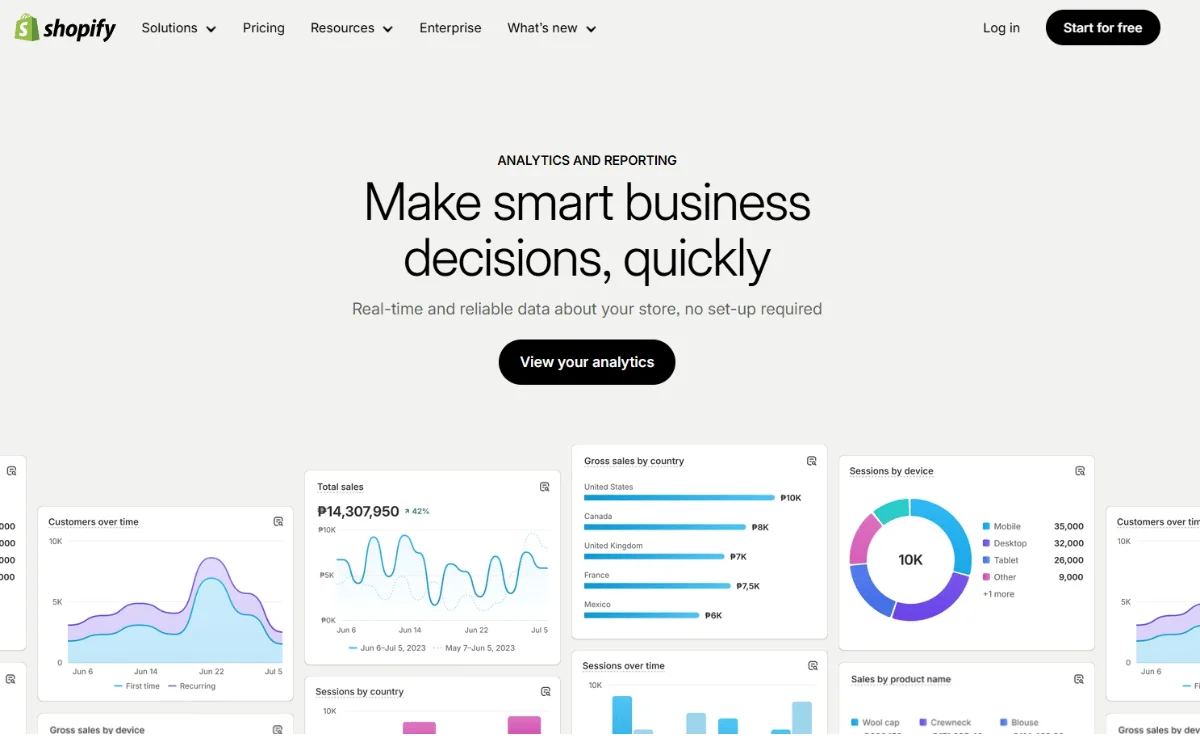
If your store runs on Shopify, you get access to a built-in, real-time data reporting tool for tracking store performance, sales, and customer behaviour.
The tool provides Shopify-built reports for powerful insights without additional integrations or tools. You can modify the reports or create your own from scratch to address your unique questions and get item-specific insights.
It also provides real-time monitoring, allowing you to get data updates immediately on your dashboard and across all reports.
Triple Whale
Designed specifically for e-commerce, Triple Whale is a complete intelligence platform used by over 2,000 agencies worldwide. It unifies your data across all channels, including sales, operations, marketing, and more.
This tool transforms your raw data into clear insights through dashboards, visualizations, and reports.
It also offers an AI-powered context engine that delivers:
- Channel budget reallocations
- Creative briefs
- Audience suggestions
- Inventory recommendations
Triple Whale claims to process 9.2 billion events daily, enabling e-commerce businesses to make informed decisions based on now, not yesterday.
HotJar
HotJar is a powerful behaviour analytics tool for e-commerce that uses session recordings, heatmaps, and feedback tools to visualize how customers interact with your store.
Its heatmaps show where your visitors move, click, and scroll on every page, allowing you to identify UX issues and pain points. With session replays, you can reproduce user web or app sessions, such as typing and mouse movements, to gain qualitative insights into user behaviour.
This tool offers powerful features, including surveys, funnels, and user tests, to optimize digital experiences and boost conversion rates.
Glew
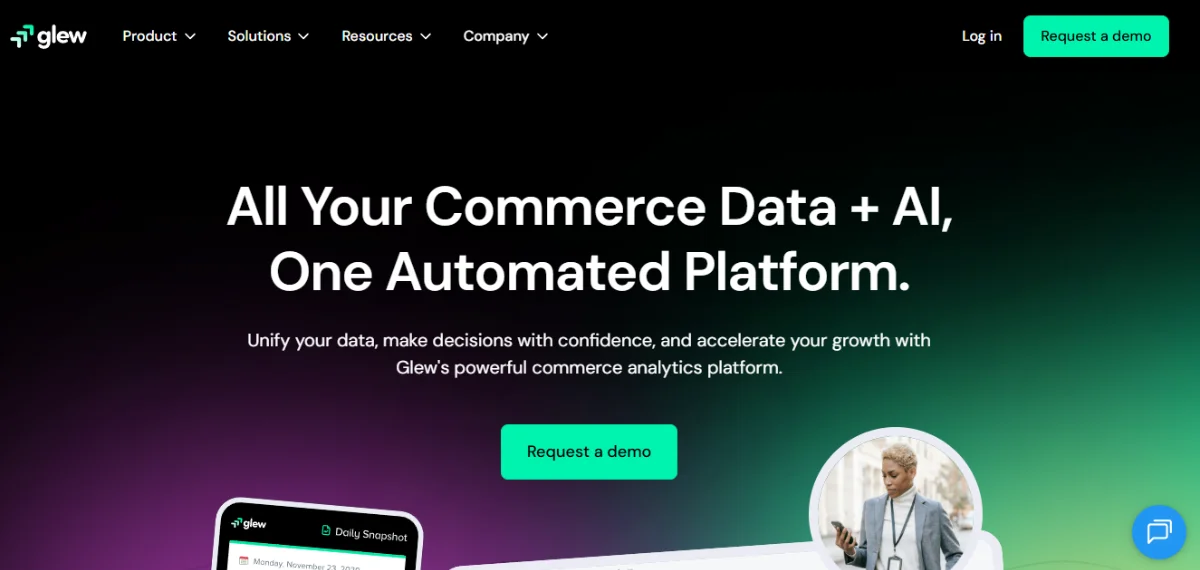
Glew is an all-in-one commerce data platform that unifies your data to accelerate growth and make sound decisions with confidence. It boasts over 170 integrations and robust API capabilities to connect data across your entire tech stack.
This platform offers an automated ETL process and an intelligent data warehouse to streamline data integration from disparate sources, eliminating inconsistencies and ensuring seamless updates. It also provides built-in reporting to allow you to create custom reports with just a few clicks.
Mixpanel
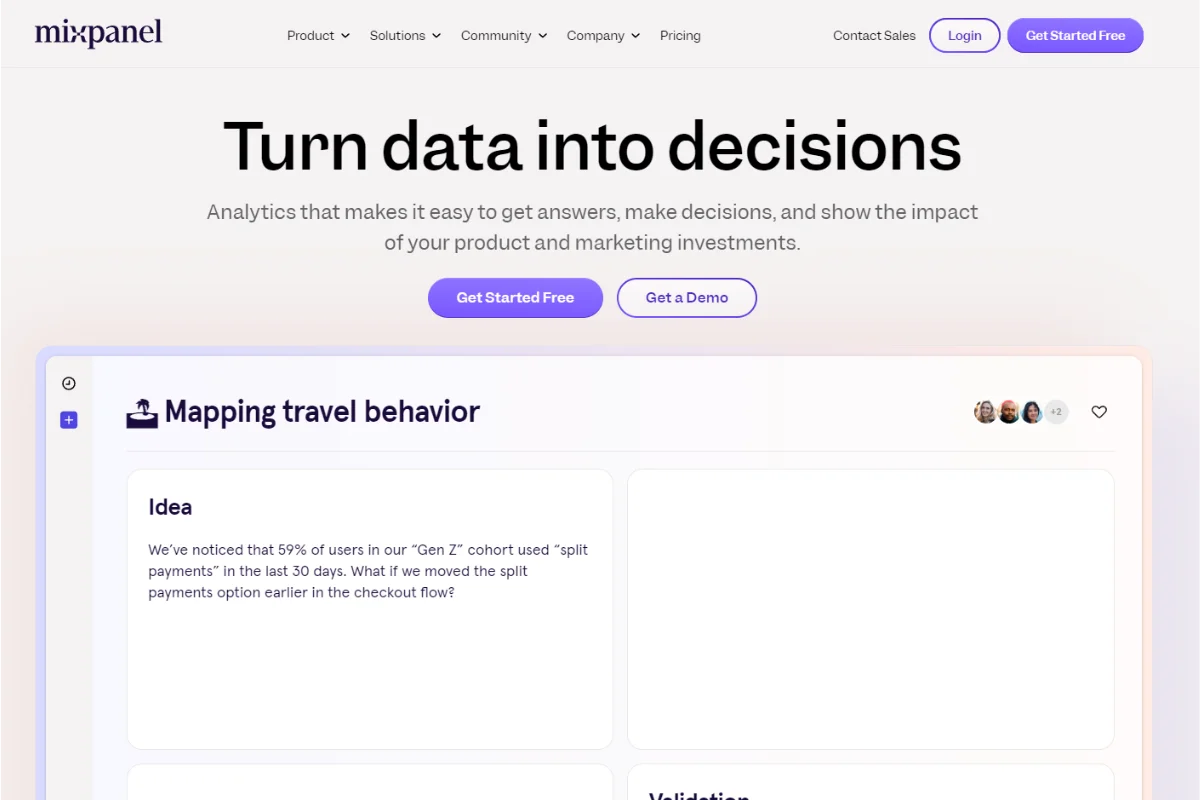
With Mixpanel, you can run full lifecycle analysis to measure the true impact of e-commerce marketing campaigns.
It allows you to:
- Analyze user cohorts to tailor marketing and user experiences
- Connect data from multiple sources for a unified view
- Unlock key customer behavior insights
- Attribute campaign efforts to specific outcomes
This tool integrates with popular e-commerce platforms, such as Shopify and WooCommerce, for automatic tracking. It allows your team to move beyond tracking sales to understanding the “why” behind specific customer actions, such as clicks and cart abandonment.
Matomo
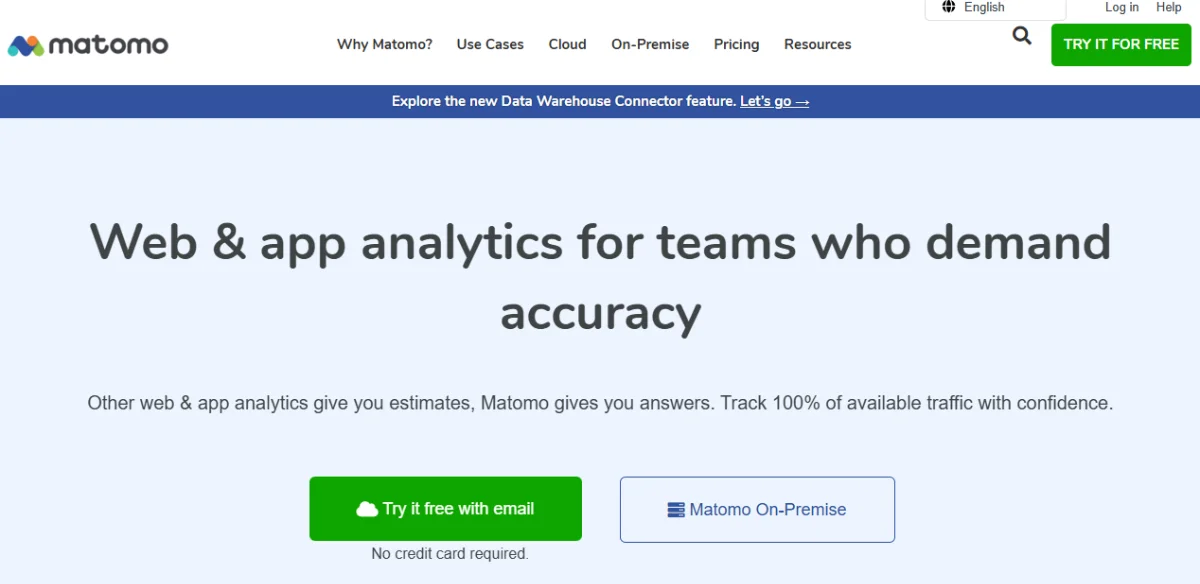
Matomo claims to be a privacy-first Google Analytics alternative that offers comprehensive insights into your customers’ purchasing behavior.
It lets you identify which channels are converting the most customers for your business, allowing you to optimize your marketing strategy. You can track everything you sell on your website to understand trending products and user patterns.
This tool provides deep insights into an individual user’s full behavioural patterns to assess their journey, actions, and purchases. It integrates seamlessly with popular platforms like Shopify, Magento, and WooCommerce.
Adobe Analytics
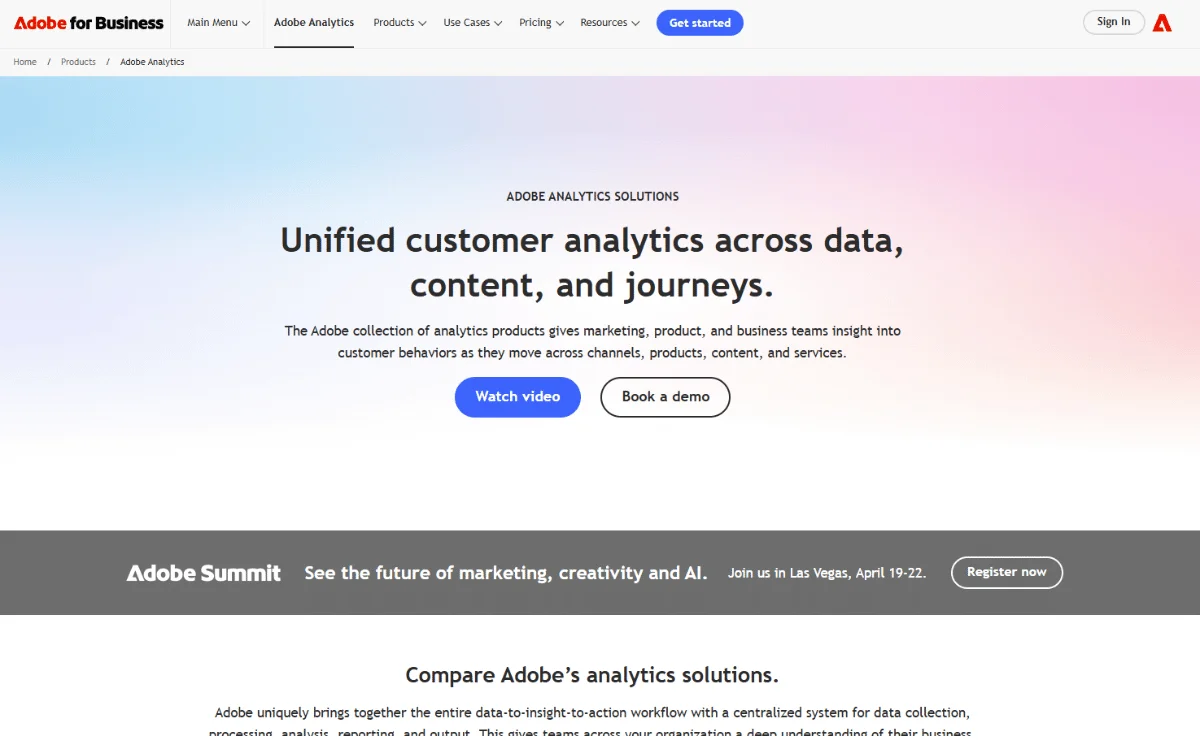
Adobe Analytics for e-commerce provides a comprehensive platform to track, analyze, and optimize the customer journey, conversion rates, and sales performance. It centralizes your entire workflow for effective data collection, processing, analysis, and reporting.
It offers different analytics solutions, including:
- Customer journey analytics: Connects customer identities and interactions across all channels to enable holistic analysis.
- Digital analytics: Helps you transform digital data into actionable insights
- Content analytics: Measures your content performance and trends
- Product analytics: Provides in-depth analysis to spot friction points and conversion drivers
With these analytics solutions, you get a deep understanding of your ecommerce businesses to make better decisions faster and optimize experiences.
Advanced Analytics Techniques for Competitive Advantage
Collecting, organizing, and interpreting data is not enough. With advanced analytics techniques, you can gain deeper insights into your customers, sales performance, and marketing campaigns to a competitive advantage.
Here are the techniques you can use:
- Predictive modeling: Using machine learning, historical data, and seasonal trends allows you to anticipate demand to maintain the right stock levels.
- Churn prediction analysis: Machine learning can help identify customers likely to churn, allowing for targeted retention efforts.
- Behavioural analysis: With this method, you can understand user behavior, purchase history, and demographics to create personalized campaigns and recommendations.
- Advanced attribution and reporting: This technique lets you identify the channels that contribute most to a purchase, enabling you to optimize your marketing spend.
Advanced techniques move beyond surface-level insights, providing actionable data that improves decision-making efficiency and gives you a significant competitive edge.
How CFO Expertise Can Help
Beyond these techniques, you can also work with experts like CFO Expertise for tailored guidance and insights.
At CFO Expertise, we provide fractional CFO services for e-commerce to help you optimize growth and scale profits. Our team analyzes your e-commerce data to deliver accurate forecasts and support growth planning, simplifying your management of inventory, cash flow, and marketing spend.
Read to make data-driven decisions? Book a free consultation today to speak to an expert.
How to Apply Analytics Across Key E-Commerce Functions
Your business features different functions that can benefit from e-commerce analytics. Here is how to apply analytics across the functions to drive value:
- Customer acquisition and marketing: You can analyze your customer acquisition cost (CAC) and return on ad spend (ROAS) to identify and optimize the profitable channels.
- Conversion rate optimization (CRO): Analyze behavioral analytics to understand how users interact with your site to reduce card abandonment.
- Inventory management and demand forecasting: With predictive analytics, you can forecast demand to prevent stockouts or overstocking.
- Pricing strategy: Use real-time market data, demand forecasts, and competitor pricing to optimize price points while ensuring a better profit margin.
- Product performance and merchandising: Review conversion rates, product views, and sales revenue to identify top-performing products to cross-sell and upsell.
- Customer retention and lifetime value: Track your customer churn rate to understand long-term profitability and target high-value segments to reduce churn.
With e-commerce analytics, you can gain access to powerful predictive and prescriptive insights to understand patterns across all your key functions. This allows you to drive growth and operational efficiency.

Frequently Asked Questions (FAQs)
Want to learn more about ecommerce analytics for decision-making? Here are our expert responses to common questions asked by sellers:
How Does E-commerce Analytics Support Forecast Accuracy?
E-commerce analytics support forecast accuracy by using machine learning to analyze historical data, real-time data, and market trends.
Analytics tools feature predictive AI models and real-time data integrations to analyze vast amounts of data and recognize patterns, improving the accuracy of e-commerce forecasts.
What Role Does AI Play in E-commerce Analytics Platforms?
E-commerce analytics platforms use AI to convert raw datasets into actionable, real-time insights for enhanced decision-making.
AI simplifies the process, especially for e-commerce businesses with massive volumes of data. It also enables hyper-personalization for the customer journey, optimizes pricing, and predicts market demand.
How Often Should E-commerce Data Be Audited?
E-commerce data can be audited on a tiered schedule: daily, weekly, and quarterly or bi-monthly.
Daily audits provide critical insights like sales and traffic, while weekly audits allow you to track operational metrics, such as inventory, bugs, and UX problems. Quarterly audits are important for thorough reviews of site health and technical performance.
What Are Common E-Commerce Analytics Mistakes?
Common e-commerce and D2C analytics mistakes include improper conversion-tracking setup, ignoring mobile user behaviour, and relying on vanity metrics such as page views.
Also, some sellers fail to segment data to understand specific audience behavior, rely on single-click attribution, ignore abandoned carts, and lack clear KPIs.
How Does Analytics Influence Inventory Planning?
Analytics transforms inventory planning from a reactive, manual process into a proactive, data-driven strategy.
With the use of AI, machine learning, and real-time data, analytics helps e-commerce businesses to predict demand, optimize stock levels, and reduce inventory costs.
Conclusion
With e-commerce analytics, you can collect and analyze data across the customer journey to drive informed decisions and business growth. It offers real-time, descriptive, and predictive insights to optimize marketing spend, personalize user experiences, and manage inventory.
But if you’re struggling to understand your data, you can work with CFO Expertise to gain expert, actionable insights into your e-commerce operations.
At CFO Expertise, we have deep knowledge of platforms like Shopify and Amazon to support e-commerce and D2C brands. We offer a custom e-commerce dashboard to track revenue, CACs, expenses, growth rates, and profits. Our team delivers clear forecasting and growth planning to ensure seamless cash flow, inventory, and marketing spend management.
Book a consultation today and discover how we bring CFO-level clarity to your business.
